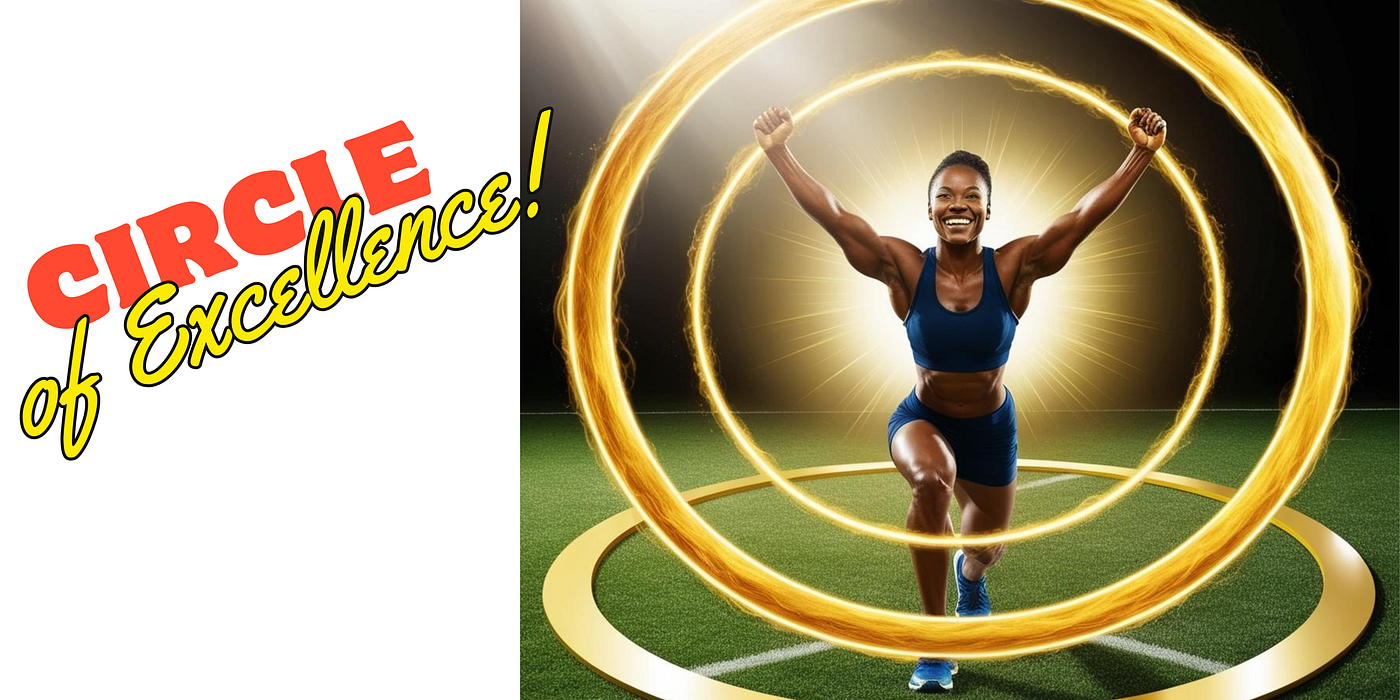
In the high-stakes world of sports, athletes face immense pressure to deliver peak performance. While we traditionaly celebrated physical prowess, we can notice nowdays athleticism’s mental aspect as equally vital. Just as artists and political hopefuls continuously hone their skills and mental fortitude, athletes embrace various mental strategies to enhance their game. One particularly impactful method gaining traction is the Circle of Excellence, a concept from Neuro-Linguistic Programming (NLP). This powerful mental exercise fosters resilience, focus, and confidence — essential for any athlete looking to excel.
The Story of Dumbo: Finding Confidence in Unexpected Places
To illustrate the importance of inner strength and self-belief, let’s consider the story of Dumbo, the lovable Disney character. Dumbo, a small elephant with oversized ears, becomes a symbol of overcoming adversity. He struggles with ridicule and self-doubt in a world that often prioritizes conventional attributes. However, his journey is transformative. He finds a magic feather that he believes can grant him the power to fly. With this feather grasped tightly in his trunk, Dumbo takes to the skies, gaining the confidence he lacks.
But the turning point in his adventure occurs when he loses the feather mid-flight. Panic washes over him, and for a moment, uncertainty reigns. However, in that instant of vulnerability, Dumbo discovers something profound: it wasn’t the feather that allowed him to fly, but his inherent abilities. With sheer determination, he embraces his uniqueness and learns to soar without the crutch of the feather.
Dumbo’s narrative beautifully underscores the importance of self-empowerment and the journey toward recognizing one’s inner strength. Much like athletes discovering their own Circle of Excellence, Dumbo’s story exemplifies the internal realization that they possess the qualities necessary to excel without needing external aid.
Understanding the Circle of Excellence
But what exactly is the Circle of Excellence? At its core, it’s a mental technique rooted in NLP that enables individuals to access positive emotions and internal resources. Athletes engage in a visualization exercise where they imagine stepping into an imagined circle that embodies desired qualities — confidence, calmness, energy, or focus. They visualize absorbing these attributes as they mentally enter this circle, effectively transitioning into their optimal performance state. This practice is a powerful form of mental rehearsal, priming the mind for success and giving it a vital role in an athlete’s training regimen.
Just as Dumbo symbolizes transformation fueled by self-discovery, athletes can tap into their greatness by acknowledging and embracing their inner capabilities rather than relying on props or tools. The Circle of Excellence provides a mental sanctuary where they can summon confidence and strength from within, similar to Dumbo’s realization that he could fly on his own.
The Importance of Mental Training in Sports
While physical strength and skill are cultivated through rigorous practice, mental performance requires unique training. Mental training encompasses techniques designed to enhance focus, manage anxiety, and build confidence. By incorporating the Circle of Excellence into their preparatory routines, athletes can achieve a holistic approach that integrates both mind and body.
Consider legendary athletes like Michael Jordan, Serena Williams, and Tom Brady. All three have woven mental tools into their preparation methods. Michael Jordan famously engaged in deep visualization, mentally rehearsing plays and scenarios before stepping onto the court. Serena Williams has openly discussed her reliance on visualization techniques to prepare for matches, while Tom Brady utilizes meditation to maintain his composure and focus in high-pressure situations. Observing how these icons approach mental training allows aspiring athletes to understand that success isn’t built solely on physical ability — it’s also about cultivating the mind.
How to Harness the Circle of Excellence
For athletes eager to enhance their performance through the Circle of Excellence, here’s a step-by-step guide to incorporating this technique into their training:
1. Identify the Desired State: Start by clarifying the mental state you wish to achieve. This could be calmness before a critical game, heightened focus during competition, or increased energy throughout your performance.
2. Visualize the Circle: Picture an imaginary circle on the floor, filled with the essential qualities you want — confidence, concentration, and resilience. You might imagine colors, sensations, or sounds that resonate with these attributes.
3. Step Into the Circle: Mentally or physically step into this circle. As you do so, allow yourself to absorb these qualities. Visualize the transformation within you and fully embrace this elevated state of being.
4. Anchor the State: To make this experience more tangible, create an anchor — a gesture, word, or phrase that encapsulates the feeling of being in the Circle of Excellence. This anchor is a mental tool you can use later to trigger that same state of focus and confidence when needed.
5. Practice Regularly: Like any skill, utilizing your Circle of Excellence becomes more natural with practice. Step into your circle regularly, especially before competitions or high-pressure situations, to reinforce this mental state.
6. Reflect and Adjust: Take time after your performances to reflect on your experiences. Did you feel the expected confidence and focus? If not, make adjustments to your visualization or anchoring techniques. The goal is continuous improvement and personalization of the best process for you.
Athletes today are recognizing that mastering mental techniques is just as crucial as developing physical abilities. The Circle of Excellence can provide an invaluable competitive advantage, granting athletes the confidence and mental clarity needed to outperform their opponents.
The Broader Impact of Mental Training
Beyond immediate performance benefits, integrating mental training techniques, such as the Circle of Excellence, fosters resilience in athletes, preparing them to face challenges on and off the field. This mental fortitude can lead to a longer career, as athletes prioritizing their mental health are better equipped to handle the pressures of competition and the inevitable setbacks accompanying any sport.
Moreover, this emphasis on mental performance can enhance the overall sporting experience. When athletes feel connected to their mental strengths, their enjoyment of the sport can grow. They’re more likely to approach training enthusiastically and view challenges as opportunities for growth rather than obstacles, leading to a more fulfilling athletic journey.
In a world that often emphasizes physical attributes, it’s essential to acknowledge the power of the mind in sports. Just as Dumbo discovered his ability to fly through self-discovery, athletes can unlock their potential through the Circle of Excellence. By tapping into their inner resources and enhancing their mental performance, they can step onto the field, court, or track with renewed confidence and purpose.
Ultimately, by embracing mental training, athletes can cultivate a comprehensive approach to performance that recognizes the intricate connection between mind and body. By doing so, they can unleash the athlete within, soaring to new heights of excellence and fulfillment in their sporting endeavors.
Originally published on Medium.
Want your team to perform like this under pressure? See Team & leader training or book a 30-minute diagnostic call.